Carpenter Ants
Camponotus spp.
Carpenter ants are large ants associated with moisture-damaged wood. They don’t eat wood like termites—they excavate galleries for nesting. Seeing them indoors often points to an entry route and a moisture issue that needs attention.
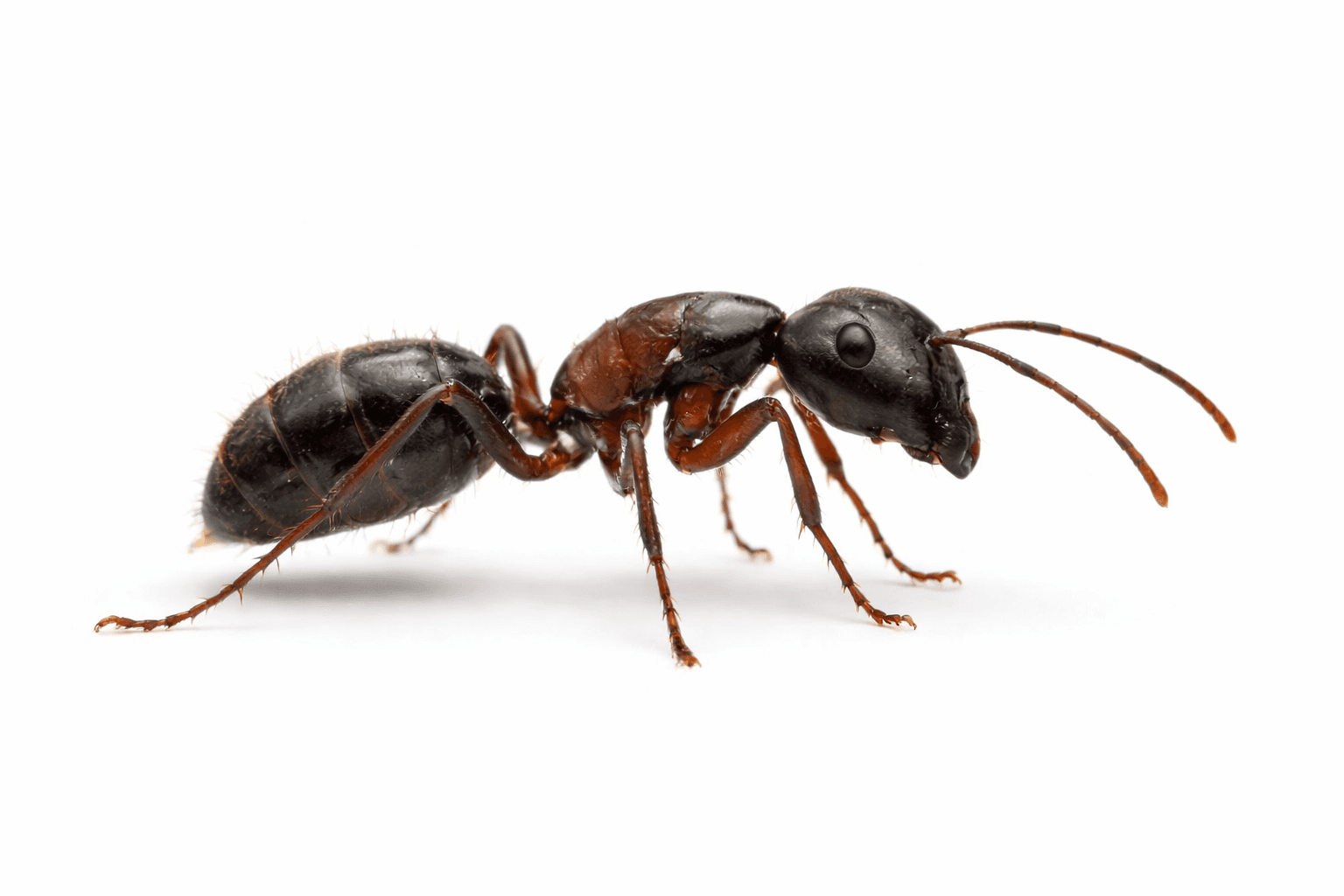
What they look like
- Large ants, often black or black-and-red (size varies within a colony).
- Elbowed antennae and a narrow waist; smooth, shiny appearance compared to many small ants.
- Winged ants (“swarmers”) may appear seasonally near windows or lights.
Large ants indoors aren’t automatically carpenter ants—but carpenter ants are the main “large ant + wood concern” category.
Nesting and colony behavior
- They excavate galleries in wood for nesting (they don’t consume wood as food).
- Moisture-damaged wood is a common starting point: leaks, condensation, poor drainage.
- Colonies can be outdoors (stumps/trees) with foragers entering buildings, or they can establish in structural voids when moisture is present.
The practical takeaway: carpenter ants are often a symptom of a water problem.
Where they’re commonly found
- Basements, sill plates, and rim joists where moisture collects.
- Around windows/doors with water intrusion or compromised caulking.
- Bathrooms, kitchens, and laundry rooms near plumbing leaks.
- Attics/soffits where roof leaks or condensation damage wood.
- Outdoor staging: stumps, firewood piles, landscape timbers, and trees near the home.
Signs that matter
- Repeated sightings of large ants in the same indoor area (especially near moisture).
- Frass: coarse wood shavings/debris pushed out of galleries (often mixed with insect parts).
- Rustling sounds inside walls/wood in quiet conditions (not always present).
- Winged ants indoors can indicate a nearby colony or interior void activity.
Common signs homeowners notice
- Large ants near windows, basements, or bathrooms.
- Ants trailing along edges or through utility penetrations.
- Small piles of sawdust-like material near trim, sills, or baseboards.
- Seasonal “swarmer” ants appearing suddenly near lights.
Common misidentifications in Alberta
Termites are not established in Alberta. Most “termite” concerns here are really moisture damage plus carpenter ants or other wood-associated insects.
Small dark ants in kitchens are usually outdoor foragers (field/pavement ants). Carpenter ants are significantly larger and more tied to wet wood and structural voids.
What effective treatment looks like (high level)
- Confirm: identify the species and whether the colony is outdoor or in-structure.
- Address moisture: locate leaks/condensation sources contributing to wood damage.
- Targeted control: focus on nest zones, trails, and entry points (not random spraying).
- Exclusion: seal entry points once activity is controlled and routes are verified.
- Verify: confirm activity declines and does not reappear seasonally.
Long-term success usually requires correcting moisture conditions, not just killing foragers.