Common Ants
Field ants · Pavement ants
These are the most common “small ant” reports around Alberta homes. They typically nest outdoors and enter buildings to forage for food, moisture, or warmth—especially when conditions outside change.
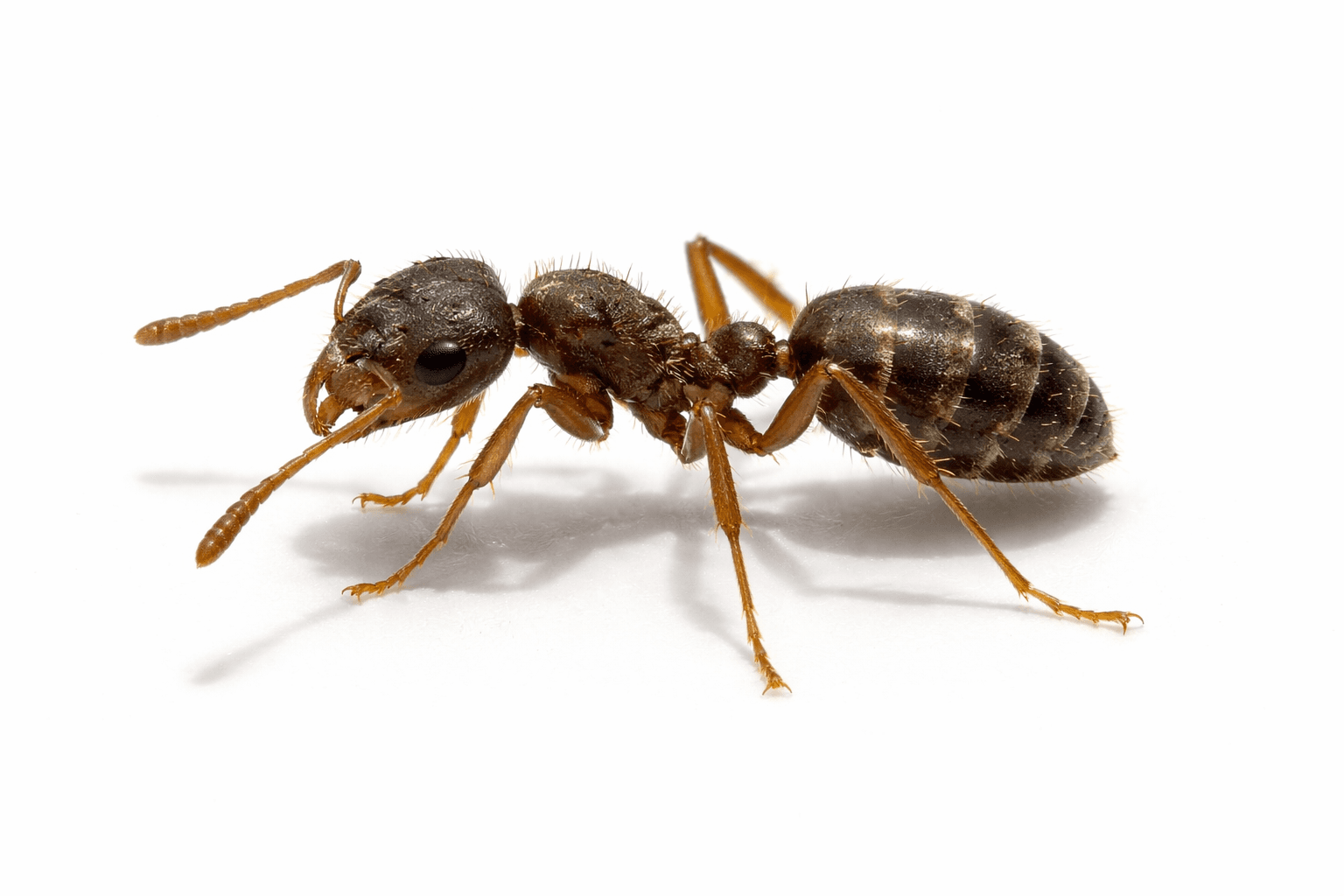
What they look like
- Small to medium ants, usually dark brown to black.
- Elbowed antennae and a narrow, segmented waist.
- Often seen in trails along edges: baseboards, counters, and foundation lines.
Indoors, they are usually seen as foragers. The nest is often outside, even when ants are appearing inside.
Nesting and colony behavior
- Social insects: queens and worker castes.
- Common nest sites include soil, under stones, under pavement edges, and along foundations.
- Activity increases with warm weather and stable food sources.
Ant presence indoors often reflects access to food or moisture, not necessarily an indoor nest.
Seasonal activity in Alberta
- Most visible from spring through early fall.
- Indoor sightings often increase during heat, heavy rain, or when outdoor food sources shift.
- Early spring and late summer are common peaks for nuisance trail activity.
Common signs homeowners notice
- Trails along kitchen counters, baseboards, and around pet food.
- Ants clustering at moisture points: sinks, dishwashers, bathrooms, laundry rooms.
- Outdoor activity near foundation cracks, patios, and under stones.
Common misidentifications in Alberta
Usually larger and often associated with moisture-damaged wood. If you are seeing large ants indoors or near wet structural areas, carpenter ants may be the better fit.
Very small, yellow to light brown ants that prefer warm indoor voids and can spread if handled incorrectly. If the ants are tiny and persistent in warm utility areas or multi-unit buildings, pharaoh ants are a possibility.