German Cockroaches
Blattella germanica
German cockroaches are the primary indoor roach problem in Alberta. They reproduce quickly, prefer warm tight spaces near food and moisture, and typically require bait-based, integrated control—not surface spraying. In Edmonton homes, apartments, and condos, correct identification matters because small roaches and other incidental insects are often misread.
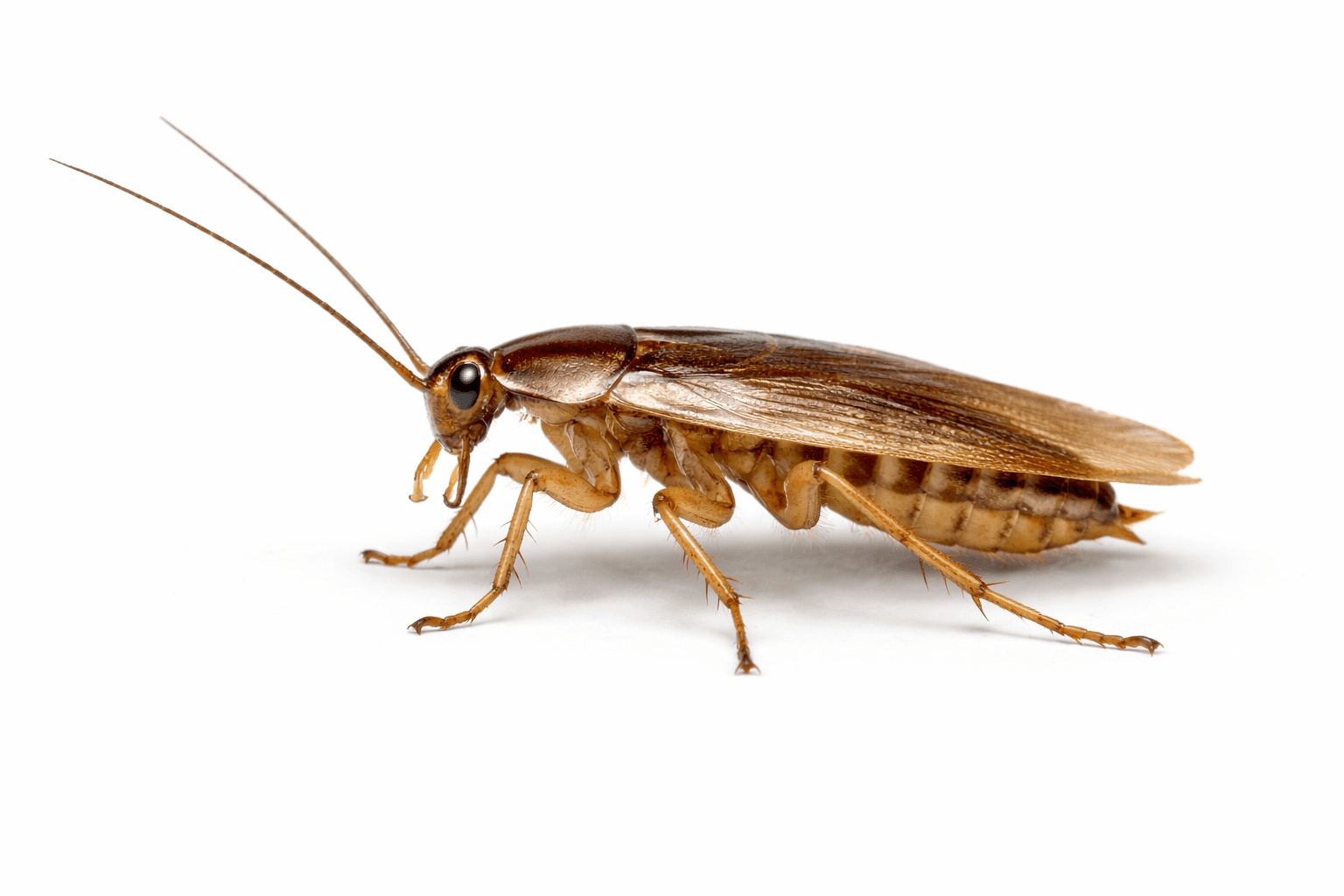
What they look like
- Small, light-brown roach with two dark stripes behind the head.
- Nymphs are smaller and darker; they cluster in warm tight harborages.
- Usually seen at night—daytime sightings often mean higher pressure.
In Alberta, if you have an indoor roach problem, German cockroaches are the default assumption until proven otherwise.
If you are dealing with an active infestation, see our German cockroach treatment in Edmonton page for details on how professional control works.
Where they hide
- Behind and under fridges, stoves, dishwashers, and microwaves.
- Inside cabinet voids, hinges, drawer slides, and corner blocks.
- Under sinks and around plumbing penetrations.
- Bathroom vanities and warm utility chases in multi-unit buildings.
- Cracks/crevices near food, moisture, and heat sources.
Signs that matter
- Nymph sightings (especially very small nymphs) indicate active reproduction.
- Pepper-like spotting/smears in corners, hinges, and tight voids.
- Egg cases (oothecae) in protected cracks (often near harborages).
- Musty odor in heavy infestations and persistent nighttime activity.
Why infestations persist
- They thrive on tiny food sources: grease, crumbs, pet food, garbage.
- Warmth + moisture concentrates activity (kitchens/bathrooms/utility areas).
- Sprays used incorrectly can reduce bait performance or push roaches deeper.
- In multi-unit buildings, untreated adjacent units can re-seed activity.
The winning pattern is integrated: sanitation + bait + targeted void work + verification.
Common signs homeowners notice
- Roaches scattering when lights turn on (kitchen at night).
- Small roaches inside drawers, behind appliances, or under sinks.
- Droppings/spotting near cabinet corners and hinge areas.
- Activity increases after cooking, cleaning disruptions, or tenant turnover.
Common misidentifications in Alberta
Many occasional invaders can look “roach-like” at a glance. If you find a single insect far from kitchens or bathrooms with no spotting or nymphs, it may be an incidental outdoor insect rather than a breeding indoor population.
Bed bugs are flat and oval and hide in seams and upholstery. German roaches are faster, prefer warm kitchen and bathroom voids, and leave spotting in cabinet hardware and appliance areas.
German cockroaches in Edmonton apartments and homes
- Apartments and condos can allow roach activity to move through shared plumbing and wall voids.
- Kitchens, bathrooms, and appliance areas are the highest-priority inspection zones.
- Early identification reduces the chance of population growth and spread to adjoining spaces.
What effective treatment looks like (high level)
- Confirm: identify species and map harborages (kitchen and bathroom priorities).
- Sanitation: reduce grease and crumb competition so bait wins.
- Bait-first strategy with targeted applications in tight voids.
- Supplement: targeted non-repellent work where bait can’t reach (as appropriate).
- Verify: follow-ups and monitoring until no-activity is confirmed.
Avoid “spray everything” approaches. Done wrong, it can scatter roaches and reduce bait uptake. If you need professional help in Edmonton, see our German cockroach treatment in Edmonton page for details on the full process.