Bed Bugs
Cimex lectularius
Bed bugs are small, nocturnal insects that hide close to sleeping areas. They don’t come from poor hygiene—most infestations start through travel, used furniture, or shared buildings. In Edmonton homes and apartments, correct identification matters because many look-alikes and skin reactions are commonly misread.
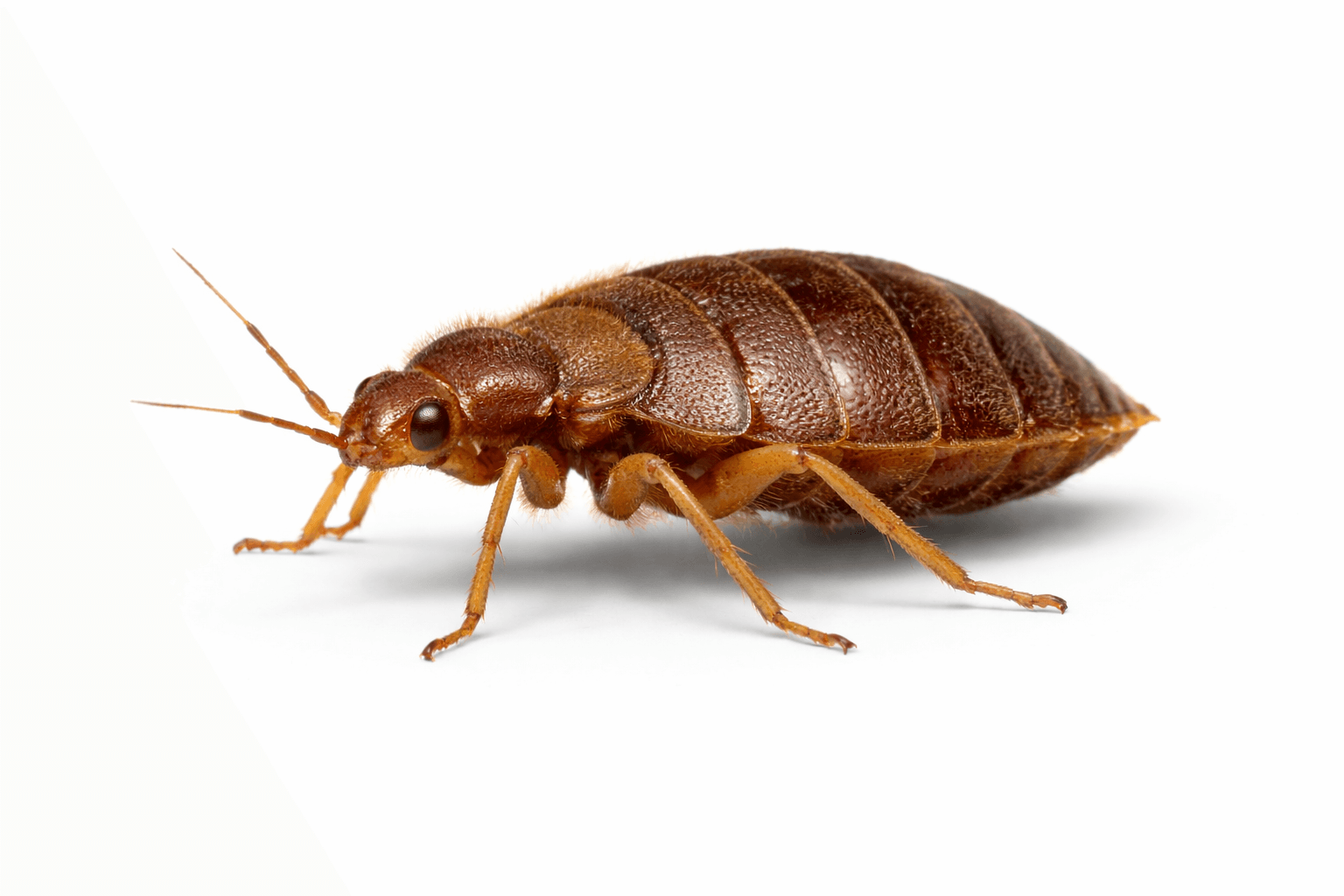
What they look like
- Adults are flat, oval, and reddish-brown (often described as apple-seed sized).
- Nymphs are smaller and lighter; they can appear translucent until they feed.
- They hide in tight seams and cracks and are usually active at night.
The most reliable “ID” is not bites—it’s evidence in seams, cracks, and harborages near the bed.
If you are dealing with an active infestation, see our bed bug treatment in Edmonton page for details on how professional control works.
Where they hide
- Mattress seams, piping, labels, and corners.
- Box spring edges/underside and bed frame joints and screw holes.
- Headboards (especially wall-mounted) and nearby baseboards.
- Couches and upholstered chairs (folds, stapled fabric, joints).
- Clutter near sleeping areas: bags, piles, bedside storage, and laundry.
Signs that matter (more than bites)
- Dark spotting on mattress seams, bed frames, or nearby baseboards.
- Cast skins (shed shells) in seams, corners, or cracks.
- Live bugs found in seams, joints, or behind headboards.
- Tiny pale eggs in protected cracks (hard to see without close inspection).
Skin reactions vary widely. Some people don’t react at all, while others react strongly to a small number of bites.
How infestations start and spread
- Travel: luggage, clothing, and personal items from hotels or rentals.
- Used furniture: couches, mattresses, bed frames, nightstands.
- Shared buildings: movement through hallways, suites, or adjacent units.
- Room-to-room transfer: moving unsealed laundry, bedding, or clutter.
Bed bugs are hitchhikers. The core risk is movement of items—not cleanliness.
Common signs homeowners notice
- New bites or welts that seem tied to sleeping (not diagnostic on their own).
- Small spots on sheets or mattress seams.
- Bugs seen when changing sheets or inspecting headboard seams.
- Persistent anxiety/itching without a confirmed insect source.
Common misidentifications in Alberta
Often found in quiet areas (closets, baseboards, under furniture) and associated with natural fibers and lint. They do not feed on people, but their hairs can cause irritation that gets mistaken for bites.
Small flies or gnats are common around kitchens and drains and can trigger a “something is biting me” assumption. If the insects are consistently around windows, sinks, or garbage, the source is usually sanitation or moisture—not a bed harborage.
Bed bugs in Edmonton apartments and homes
- Multi-unit buildings can allow bed bugs to move between adjacent suites.
- Travel and used furniture are the most common introduction routes.
- Early identification reduces the chance of spread to other rooms.
What effective treatment looks like (high level)
- Confirm: identify the insect and map the sleeping-area harborages.
- Treat: thorough work on beds + adjacent cracks/voids and furniture.
- Control transfer: strict handling of fabrics and clutter to prevent spread.
- Verify: follow-ups and monitoring until no-activity is confirmed.
Avoid DIY sprays that claim quick knockdown—misuse can make inspections harder and can push bugs into new hiding places. If you need professional help in Edmonton, see our bed bug treatment in Edmonton page for details on the full process.