Norway Rats
Rattus norvegicus
Norway rats are the only established rat species in Alberta. They are heavy-bodied, ground-oriented rodents that burrow and live close to foundations, outbuildings, and food sources. Successful control requires eliminating access, not just killing the visible rats.
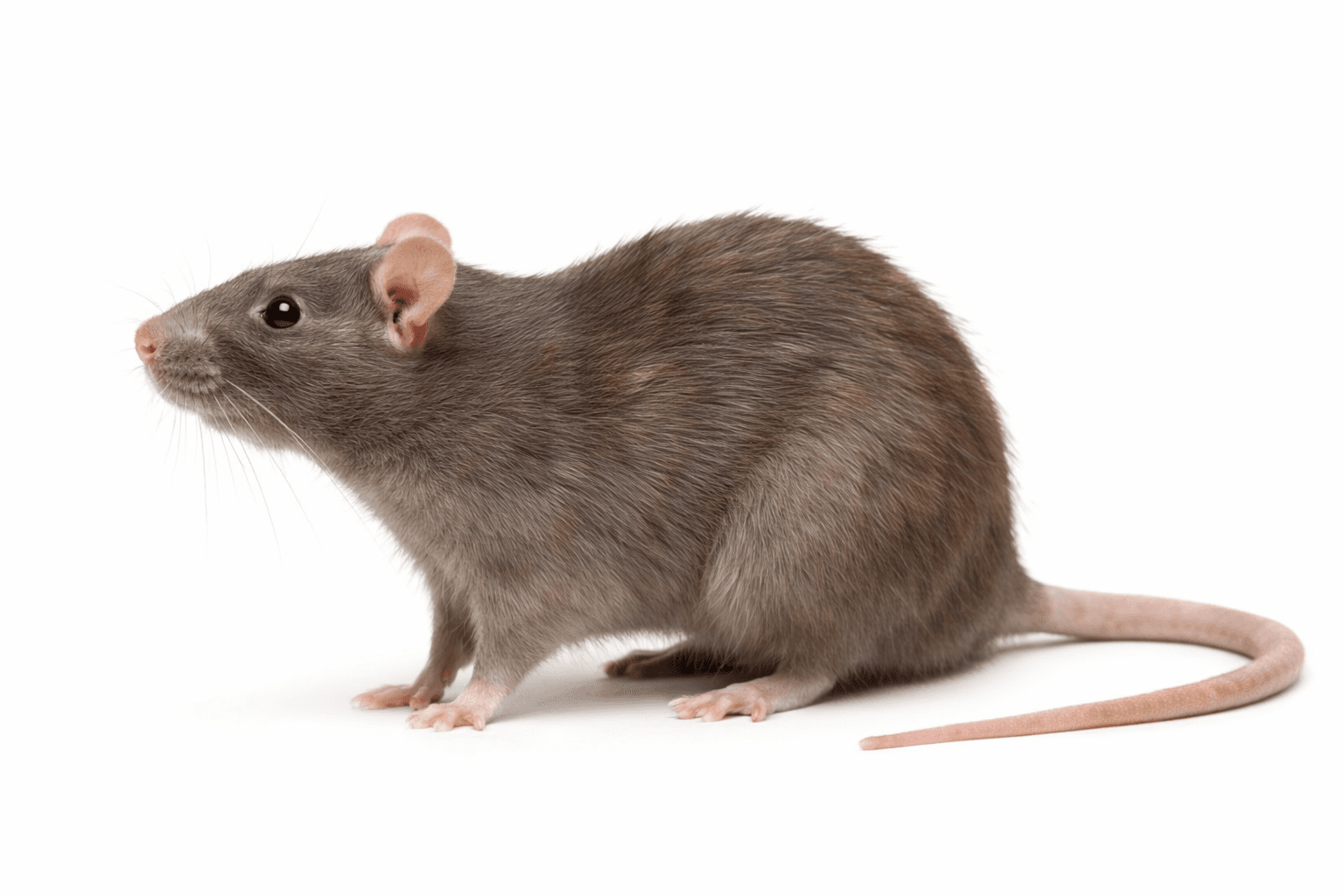
What they look like
- Large, heavy-bodied rat with a blunt nose and relatively small ears.
- Tail is typically shorter than head-and-body length (often appears thick and scaly).
- Coat is brown to gray-brown; body looks robust compared to mice.
In Alberta, “rat sightings” are uncommon in many neighborhoods, but when rats are established, they tend to stay close to ground level and food sources.
Burrowing and behavior
- Ground-oriented: prefers burrows, crawlspaces, and low structural voids.
- Burrows commonly appear near foundations, slabs, decks, sheds, and garbage areas.
- Mostly nocturnal; daytime sightings often indicate higher pressure.
- Strong gnawing ability—can enlarge weak points around doors, vents, and penetrations.
Signs that matter
- Burrow openings near foundations or outbuildings (often with disturbed soil).
- Rub/grease marks along walls and edges where they travel.
- Larger droppings (bigger than mice) in garage corners, utility areas, or near food.
- Gnawing damage on wood, plastic lids, garbage containers, and lower door areas.
- Noise at night near ground level or inside low wall voids.
Why rat problems persist
- Food access: garbage, compost, bird seed, pet food, livestock feed.
- Shelter: cluttered yards, dense vegetation, sheds, decks, and crawlspaces.
- Openings: gaps at doors, vents, foundation interfaces, utility penetrations.
- Killing without exclusion: removing a few rats doesn’t prevent replacement.
The stable solution is to remove access—food, shelter, and entry points—so pressure can’t rebuild.
Common signs homeowners notice
- Gnawing or dragging noises at night near basements, garages, or decks.
- Large droppings along walls or near stored items.
- Garbage disturbance or chewed lids/bags.
- Burrows or disturbed soil near foundations or sheds.
Common misidentifications in Alberta
Mice are smaller, have larger ears relative to the head, and can climb more easily. Rat sign tends to be larger: droppings, gnawing damage, and burrows near foundations.
Digging around decks and sheds can also come from skunks or other wildlife. Rat burrows are typically smaller openings with runways and rub marks nearby.
What effective control looks like (high level)
- Confirm: identify species and map travel routes, burrows, and food sources.
- Control: targeted trapping/bait strategy where activity is proven.
- Exclusion: close entry points and harden vulnerable ground-level interfaces.
- Food management: secure garbage, bird seed, pet food, and outdoor attractants.
- Verify: monitor for continued activity and close out burrows once inactive.
If you only remove rats without sealing access, the area often re-seeds over time.