Pocket Gophers
Thomomys talpoides
Pocket gophers are burrowing rodents that live almost entirely underground. They damage lawns, fields, and landscaped areas through tunneling and root feeding. Unlike voles, they create visible soil mounds rather than surface runways.
Specimen images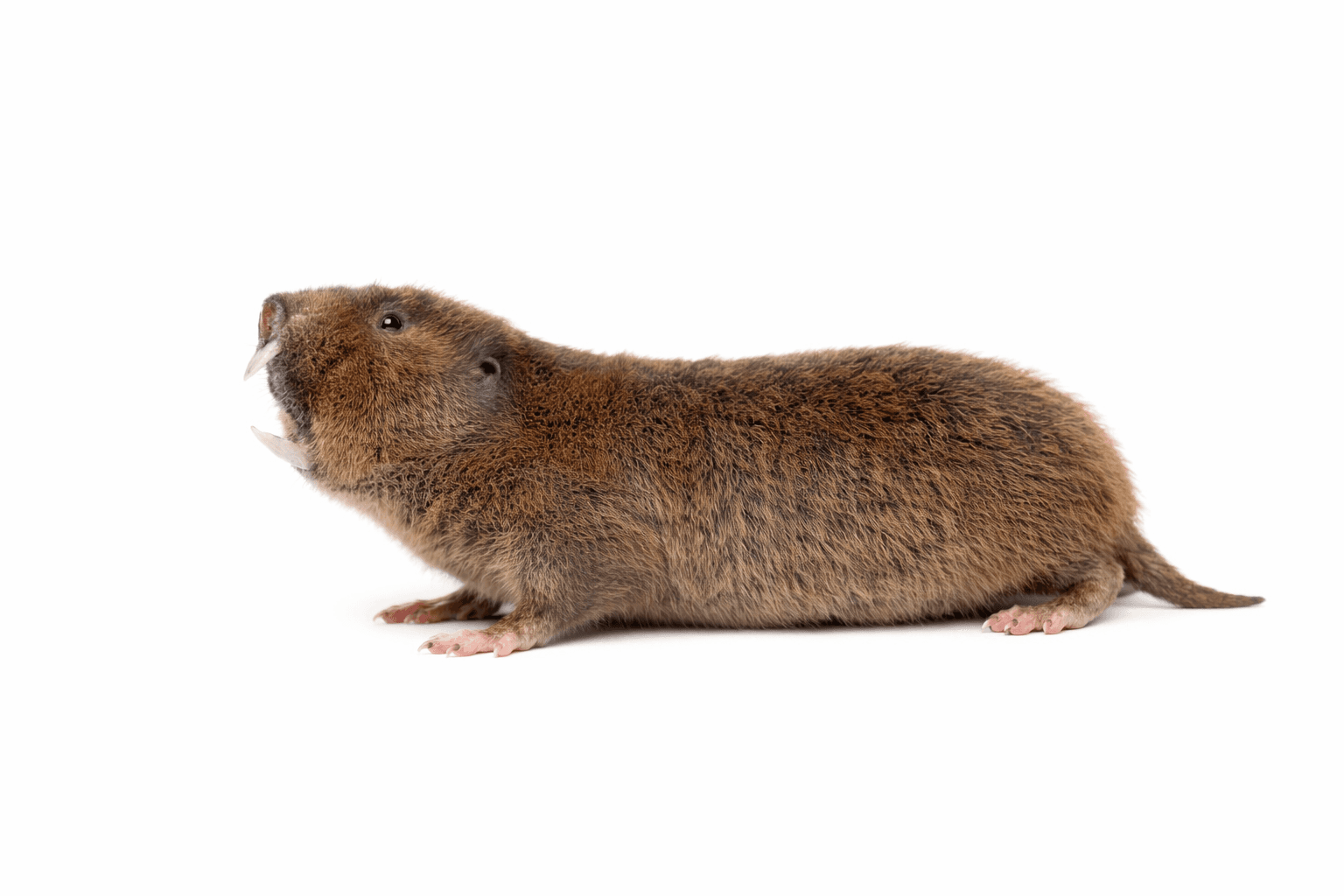
What they look like
- Stocky rodent with short legs and small external ears.
- Large front incisors adapted for digging and root feeding.
- Rarely seen above ground—damage patterns are the main indicator.
Burrowing and tunnel systems
- Create extensive underground tunnel networks.
- Push excavated soil to the surface, forming visible mounds.
- Live alone—each gopher maintains its own territory.
- Tunnel depth varies based on soil and food availability.
Unlike voles, gophers spend nearly all their time underground.
What gopher damage looks like
- Fan-shaped or crescent soil mounds with no open hole in the center.
- Root feeding that kills grass, plants, or shrubs.
- Uneven or collapsing soil from tunneling below.
- Damage concentrated in lawns, gardens, and landscaped beds.
Seasonal activity in Alberta
- Spring: peak tunneling as soil softens.
- Summer: continued feeding and mound creation.
- Fall: activity slows but remains visible.
- Winter: limited surface signs, but underground activity can continue.
Common signs homeowners notice
- Fresh soil mounds appearing overnight.
- Dead patches of grass with loose soil underneath.
- Plants wilting or collapsing from root loss.
- Raised or uneven lawn areas from tunneling.
Common misidentifications in Alberta
Voles
Voles create surface runways in grass. Gophers create soil mounds and deeper tunnels.
Moles
True moles are not established in Alberta. Most “mole” damage reports are actually gophers or voles.
Why gopher problems persist
- Abundant root food sources in irrigated lawns and gardens.
- Soft, workable soil conditions.
- Large unmanaged landscapes (fields, acreages).
- Each removed gopher leaves territory that another may occupy.
What effective control looks like (high level)
- Confirm: identify active mounds and tunnel systems.
- Target: focus control within active tunnel networks.
- Reduce attractants: manage irrigation and plant vulnerability where possible.
- Barrier strategies in high-value landscaping zones.
- Verify: monitor for new mound formation over time.
Surface-only action rarely works—control must target the tunnel system itself.