Squirrels
Sciurus spp.
Squirrels are tree-dwelling rodents that frequently enter attics, soffits, and rooflines. Most problems involve noise, insulation damage, and structural entry points. Effective control requires sealing the building envelope—not just removing the animal.
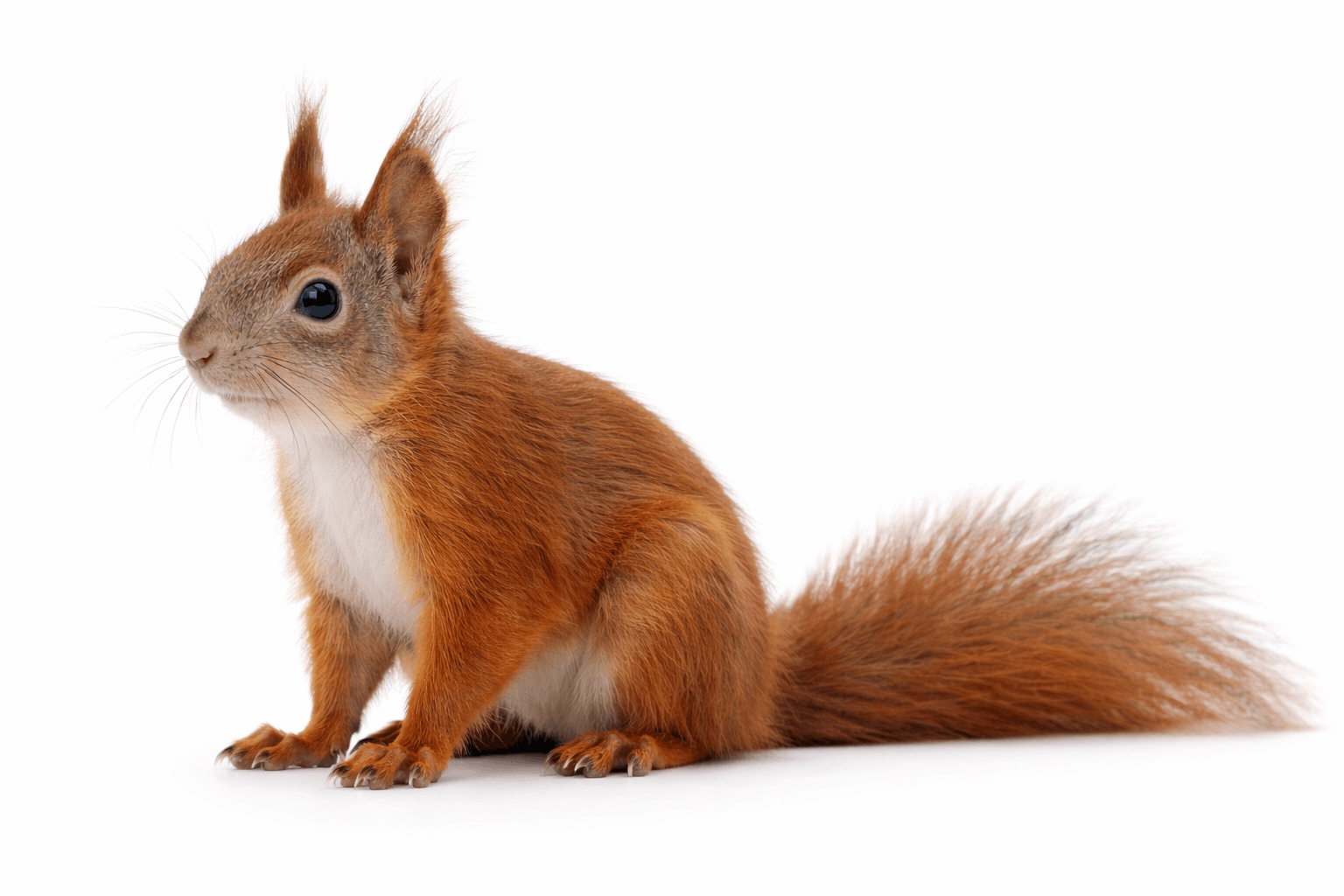
What they look like
- Medium-sized rodent with a bushy tail.
- Gray, brown, or reddish fur depending on species.
- Agile climbers commonly seen on trees, fences, and rooflines.
Squirrels are highly visual pests—homeowners often see them entering rooflines before hearing activity inside.
Entry and nesting behavior
- Enter through soffits, roof vents, fascia gaps, and roofline transitions.
- Chew openings to enlarge weak structural points.
- Nest in attic insulation using shredded material.
- Often maintain multiple entry routes if left unresolved.
Attics provide warmth, shelter, and predator protection—ideal nesting conditions.
Signs that matter
- Daytime scratching, running, or thumping in attic or ceiling.
- Chewed soffits, fascia, or vent screens.
- Insulation disturbance or nesting debris in attic spaces.
- Visible entry holes along rooflines or eaves.
- Sightings of squirrels repeatedly entering the same roof area.
Seasonal activity in Alberta
- Spring: nesting season and birth of young.
- Fall: shelter-seeking before winter.
- Winter: reduced external movement but continued attic habitation.
- Summer: activity may appear lower unless young are present.
Common signs homeowners notice
- Running or scratching sounds during daylight hours.
- Noise increases early morning and late afternoon.
- Debris falling inside walls or attic spaces.
- Visual roofline entry/exit sightings.
Common misidentifications in Alberta
Mice create lighter scratching sounds and are nocturnal. Squirrels are larger, louder, and active during the day.
Skunks den under decks and sheds, not in attics. If the activity is overhead and during the day, squirrels are far more likely.
What effective control looks like (high level)
- Confirm: identify entry points and attic nesting zones.
- Remove: humane removal of active squirrels where required.
- Exclusion: seal soffits, vents, fascia gaps, and roofline openings.
- Reinforcement: install chew-resistant barriers at vulnerable points.
- Verify: confirm no re-entry or continued attic activity.
Lasting control depends on structural sealing. Removal alone does not prevent re-entry.