Flies
House flies · Fruit flies
Indoor fly problems are usually a breeding-source problem, not an “invader” problem. Flies multiply quickly when moisture and organic material are available—but they also collapse quickly once the source is removed.
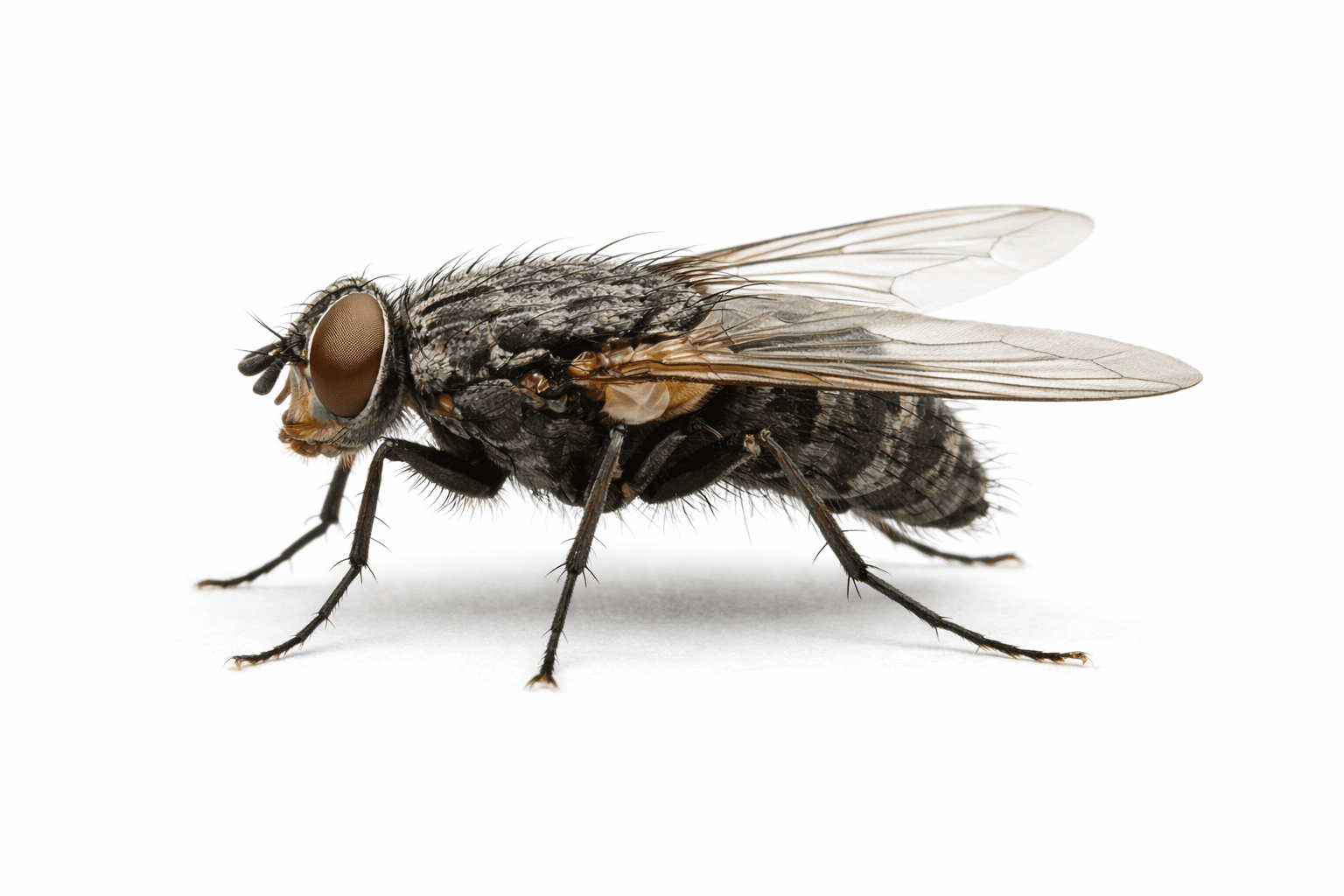
What they look like
- House flies are larger, gray, and usually seen around windows and kitchens.
- Fruit flies are very small and often hover around sinks, fruit, recycling, and drains.
- Both reproduce quickly if organic material and moisture are available.
Identification is less important than location: where they gather usually points to the source.
Why flies appear indoors
- Food waste: garbage, compost, recycling, and spills.
- Moisture + buildup: sink overflows, wet mops/rags, floor drains, disposals.
- Rotting produce or forgotten pantry items.
- Hidden sources: dead rodents, crawlspace issues, or soiled voids (less common but high impact).
Where they breed (the real problem)
- Garbage/recycling containers and organic waste residue.
- Drain slime and biofilm (especially for small flies).
- Under appliances where spills and grease accumulate.
- Pet areas: litter boxes, wet food, soiled pads.
- Floor drains and seldom-used sinks (dry traps and buildup).
Signs that matter
- Flies clustering at one window or room (often closest to the source).
- Small flies consistently around a sink, drain, or recycling.
- A sudden spike in numbers after a change: forgotten garbage, warm weather, travel.
- Persistent activity despite swatting/traps (source still active).
Common signs homeowners notice
- Flies on windowsills and light fixtures.
- Small flies hovering near the kitchen sink or fruit bowl.
- Activity increases in warm afternoons or after cooking/garbage days.
- Recurring “waves” of flies even after you kill the visible adults.
Common misidentifications in Alberta
Small fly problems often get labeled “fruit flies.” If the activity stays tight to a drain, floor drain, or sump area, the breeding source is usually biofilm buildup rather than fruit.
Flies can create stress and irritation, but they are rarely the cause of unexplained bites. If bites are the main concern, confirm insects in sleeping areas before assuming the source.
What effective control looks like (high level)
- Locate the breeding source (room concentration is the clue).
- Remove organic material and improve sanitation (garbage, recycling, spills).
- Drain maintenance where needed (buildup removal, trap health).
- Use traps as confirmation/support—not as the primary solution.
- Verify: numbers should drop rapidly once the source is removed.
If flies persist after cleanup, it usually means a hidden source still exists (under appliances, in a drain, or in a seldom-used area).