Carpet Beetles
Dermestid beetles
Carpet beetles are small indoor beetles whose larvae feed on natural fibers. They’re commonly mistaken for bed bugs, but they don’t bite and don’t live on people. Most issues come from hidden fabric damage rather than direct human interaction.
Specimen images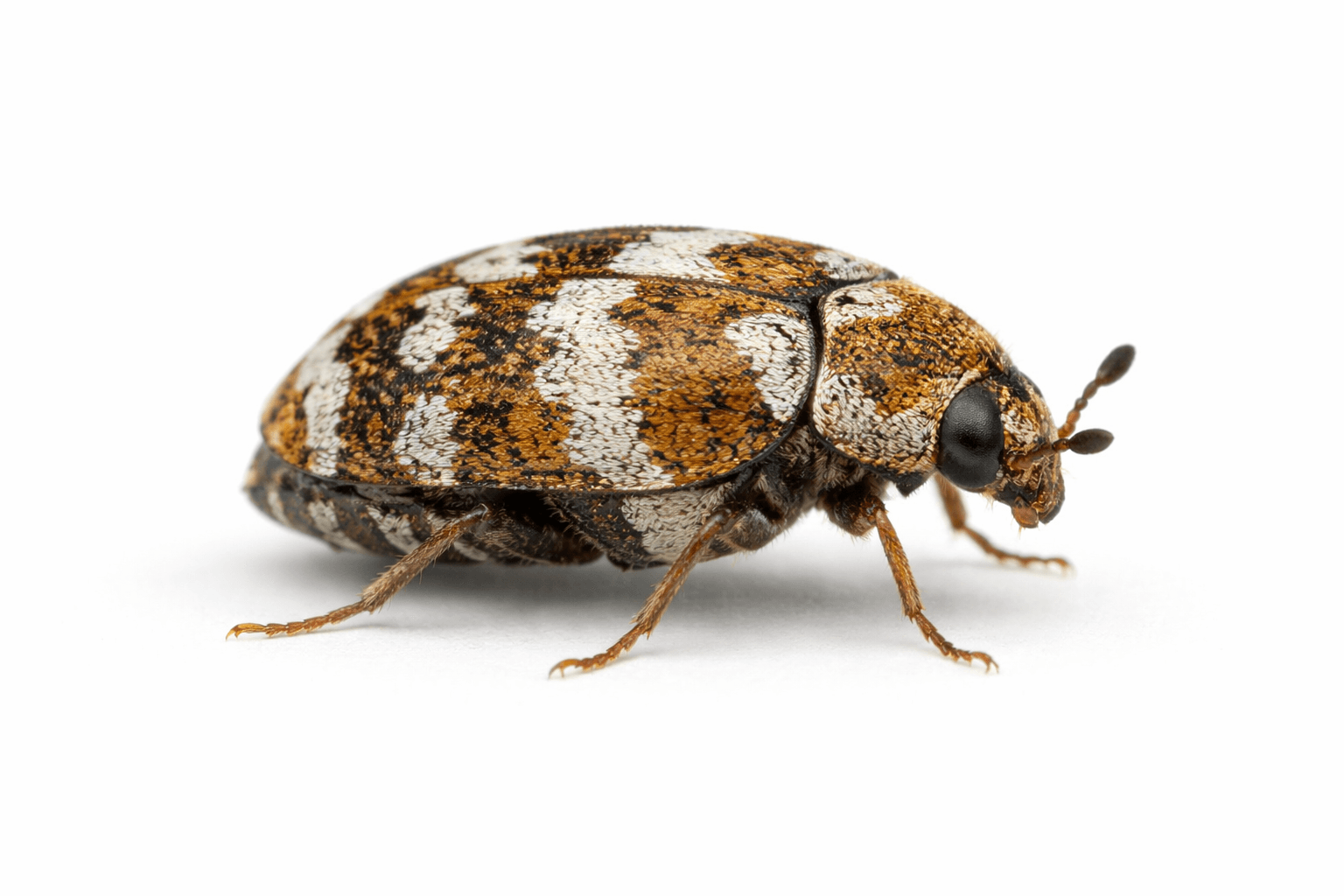
What they look like
- Adults are small, oval beetles with mottled black, brown, white, or tan patterns.
- Larvae are elongated, fuzzy, and bristled (often carrot-shaped).
- Adults are often seen near windows; larvae stay hidden in fabrics.
Homeowners usually notice adults first—but the larvae are the damaging stage.
What they feed on
- Wool, fur, feathers, and natural textiles.
- Carpets, rugs, blankets, and clothing.
- Stored fabrics, taxidermy, and upholstered furniture.
- Lint, hair, and organic debris in quiet areas.
Where they’re commonly found
- Closets, drawers, and stored clothing areas.
- Under furniture and along carpet edges.
- Baseboards, vents, and floor registers.
- Attics or storage spaces with animal materials.
Signs that matter
- Irregular holes in natural-fiber clothing or textiles.
- Shedded larval skins near fabric storage areas.
- Adults near windows (drawn to light).
- Damage in quiet, undisturbed storage zones.
Common signs homeowners notice
- Small beetles appearing on windowsills.
- Fabric damage in closets or storage bins.
- Fuzzy larvae crawling on walls or near baseboards.
- Irritation from larval hairs (often mistaken for bites).
Common misidentifications in Alberta
Bed bugs
Carpet beetle larvae are frequently mistaken for bed bugs. Bed bugs live in mattress seams and feed on blood; carpet beetles live in fabrics and feed on fibers.
Clothing moths
Both damage natural fibers, but moths create webbing and cocoons. Carpet beetle larvae leave shed skins and irregular feeding damage instead.
What effective control looks like (high level)
- Locate: identify fabric zones and larval harborages.
- Remove: laundering, heat treatment, and fabric handling.
- Deep cleaning: carpets, baseboards, vents, and storage zones.
- Targeted treatment in voids or fabric-adjacent areas where appropriate.
- Monitor to ensure no continued textile damage.
Long-term control focuses on fabric management and deep sanitation—not broad pesticide use.