German Cockroach Treatment in Edmonton
How we eliminate active infestations and verify that activity has stopped
If you’re dealing with German cockroaches in your kitchen, bathroom, or around appliances, the issue usually involves hidden harborages, ongoing reproduction, and conditions that allow activity to persist. Our German cockroach treatment in Edmonton focuses on identifying active areas, applying targeted control, reducing food and moisture competition, and following up until activity is no longer present.
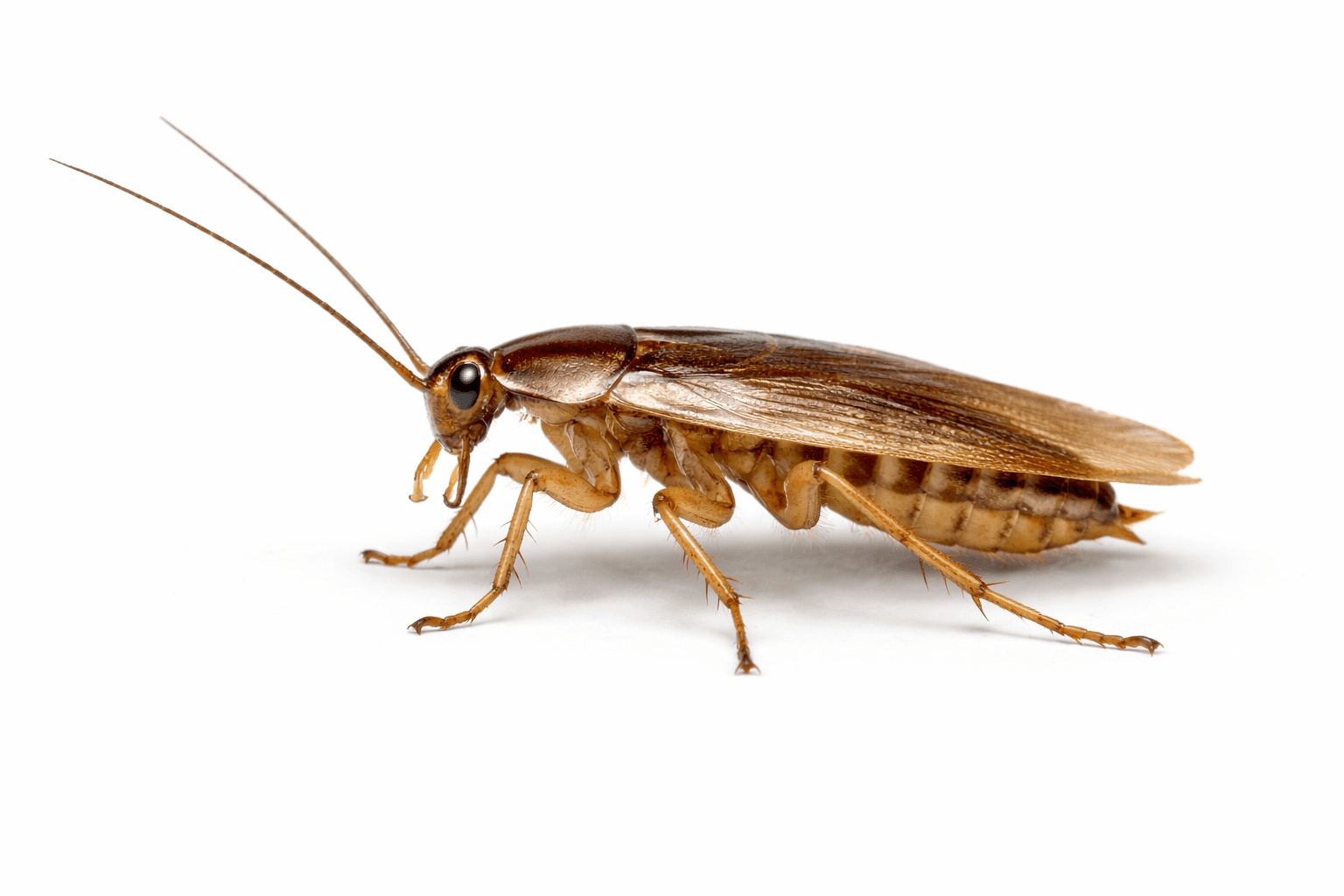
What our German cockroach treatment is designed to do
- Find and treat the active harborages where roaches are living and reproducing.
- Reduce live activity while improving long-term control through targeted placement.
- Limit rebound by addressing food, moisture, and competing conditions.
- Confirm progress through follow-up inspections and reassessment.
German cockroach control is rarely about spraying open surfaces. Effective treatment is usually built around inspection, precision, and follow-up.
Most infestations show clear improvement within 1–3 weeks, but full elimination depends on infestation size, preparation quality, sanitation, and whether all active harborages are being reached over time.
How treatment generally works
- Inspection: kitchens, bathrooms, plumbing areas, appliance zones, and tight voids are assessed.
- Treatment: active harborages are targeted with an integrated approach appropriate to the infestation.
- Guidance: clients receive preparation and sanitation instructions that support treatment performance.
- Follow-up: the unit is reassessed and treated again as needed until activity is no longer present.
Most treatments begin reducing visible activity within days, but full resolution takes longer because German cockroaches hide deeply, reproduce quickly, and often require repeated inspection and follow-up. The exact treatment plan can vary depending on infestation size, sanitation conditions, clutter, appliance layout, and whether the problem is in a detached home or multi-unit building.
Areas commonly treated
- Behind and under fridges, stoves, dishwashers, and microwaves.
- Cabinet hinges, drawer tracks, voids, and corner joints.
- Under sinks and around plumbing penetrations.
- Bathroom vanities, utility areas, and warm hidden crevices.
- Other tight cracks and harborages close to food, water, and heat.
Client preparation before service
- Reduce clutter inside cabinets, under sinks, and around appliances.
- Clean up loose crumbs, grease buildup, and food debris before service where instructed.
- Store food properly and avoid leaving pet food or dirty dishes out overnight.
- Make key areas accessible so kitchens, bathrooms, and appliance edges can be worked on properly.
- Follow any preparation instructions for emptying specific cabinets or drawers if requested.
Preparation matters because heavy food competition and inaccessible harborages can reduce treatment performance.
Guidelines after treatment
- Follow the re-entry guidance provided at service.
- Do not clean away bait placements or treated crack-and-crevice areas.
- Continue good sanitation, but avoid disturbing treatment zones unnecessarily.
- Report new sightings accurately, including room, time of day, and life stage if possible.
- Attend follow-up visits if they are part of the treatment plan.
One of the most common mistakes after service is cleaning or spraying over treatment placements, which can reduce control and slow the process.
What clients should avoid
- Do not use random aerosol sprays or foggers between visits.
- Do not spray over bait placements.
- Do not ignore small nymph sightings, since they often indicate ongoing reproduction.
- Do not assume reduced activity means the infestation is fully eliminated.
- Do not leave food residue, grease, garbage, or standing moisture unmanaged.
Poor DIY treatment can scatter roaches, interfere with bait uptake, and make the infestation harder to eliminate.
Why German cockroach infestations can take time
- They reproduce quickly and hide in very tight, warm spaces.
- Small nymphs are easy to miss without detailed inspection.
- Food, grease, and water sources support survival between visits.
- In apartments and condos, untreated neighboring units can affect results.
Signs treatment is working
- Fewer sightings over time, especially of small nymphs.
- Reduced activity in kitchens and bathrooms at night.
- Less spotting and fewer fresh signs in active harborages.
- Improvement that remains stable over time rather than dropping briefly and returning.
True progress is measured by sustained decline and follow-up verification, not just a short-term drop in visible activity.
German cockroach treatment for apartments and condos in Edmonton
In multi-unit buildings, German cockroach control is often more complicated because activity can move through shared plumbing chases, utility voids, wall penetrations, and adjacent suites.
For Edmonton apartments and condos, consistent preparation, unit-specific treatment, and follow-up are especially important.
This is why German cockroach treatment in Edmonton often requires both precise in-unit control and realistic follow-up expectations, especially in shared-wall buildings.
Common questions about German cockroach treatment in Edmonton
- How long does it take to get rid of German cockroaches? Most infestations show clear improvement within 1–3 weeks, but full elimination can take longer depending on infestation size, preparation, sanitation, and follow-up access.
- Do I need to leave my home during treatment? Sometimes. Re-entry depends on the specific products and treatment plan used, and you will be given service-specific guidance at the appointment.
- Why are German cockroaches hard to eliminate? They reproduce quickly, hide in tight warm spaces, and often survive where food, grease, moisture, and clutter support them.
- Can I spray them myself between visits? This is usually a mistake. Random aerosol spraying can scatter roaches, disrupt bait performance, and make the infestation harder to track and eliminate.
- Why do I still see some roaches after treatment? A reduction in activity usually happens before full elimination. Follow-up is often needed to verify that hidden harborages and newly emerged roaches are no longer active.
When to call for professional help
- You are seeing roaches regularly in kitchens, bathrooms, or around appliances.
- You are finding small nymphs, spotting, or egg cases in cabinets or tight voids.
- DIY sprays have not solved the problem or seem to make activity harder to track.
- You want a structured treatment plan with inspection, treatment, and follow-up.
If you need professional German cockroach treatment in Edmonton, contact Final Pest Control to discuss the situation and next steps.